
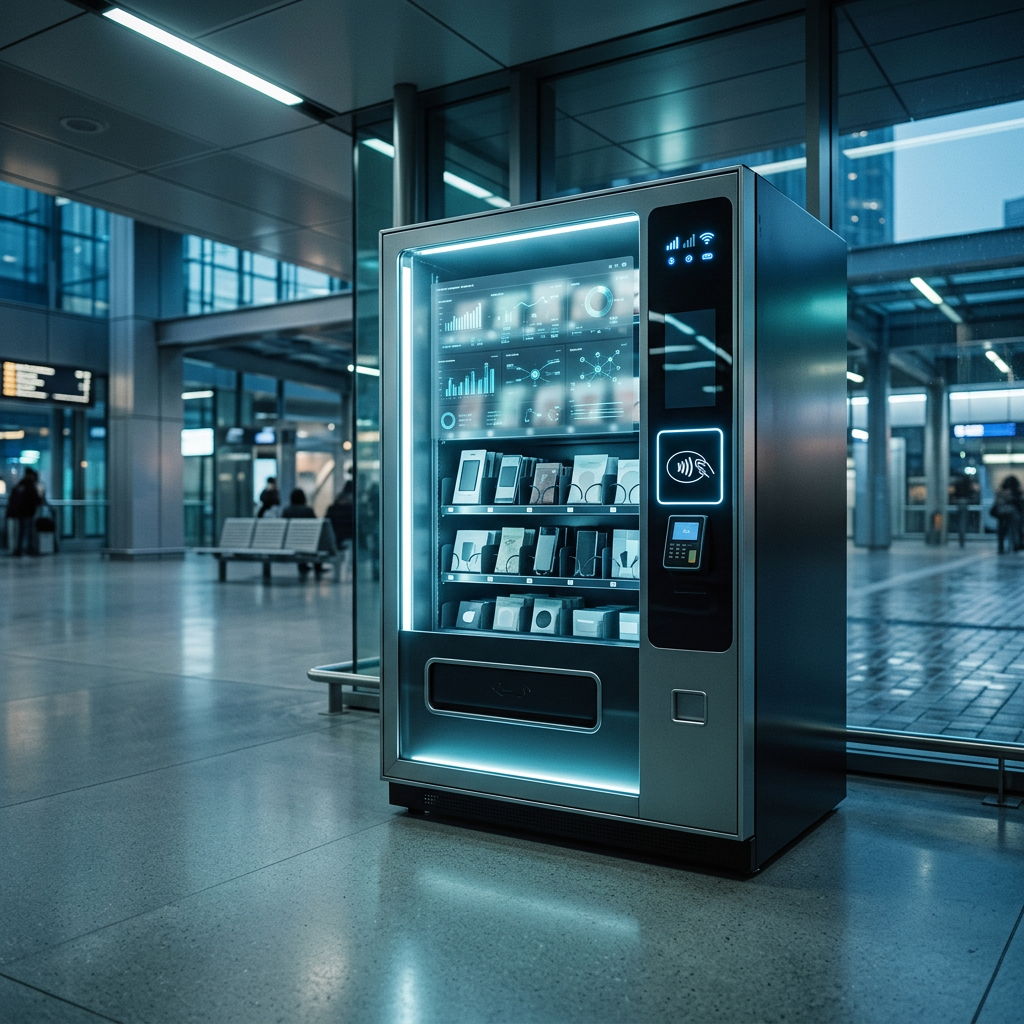
Accept More Payment Methods, Monitor Your Machines Remotely, Understand Your Business, Build Customer Loyalty, and Manage Self-Service Operations With Nayax
Imagine owning a vending-machine business with dozens of machines spread across a city.
A customer walks up to one of your machines.
They want to buy something.
But they do not have cash.
They walk away.
You have potentially lost a sale.
Now imagine another problem.
One of your machines stops working.
You do not know.
The machine sits there for hours—or perhaps days—until somebody physically visits the location.
Meanwhile, customers cannot buy products, inventory is not being tracked properly, and revenue is being lost.
Then there is another challenge.
You have no easy way to know:
Which products are selling?
Which locations perform best?
When machines need attention?
Which customers return frequently?
Which promotions work?
Where inventory is running low?
How much cash is being collected?
What are your sales trends?
As self-service commerce becomes increasingly digital, businesses need much more than a card reader.
They need payments, connectivity, telemetry, business intelligence, operational tools, customer engagement, and centralized management.
This is the opportunity that Nayax is designed to address.
Nayax describes itself as a global commerce enablement and payment platform designed to help merchants scale their businesses, improve revenue potential, and increase operational efficiency. Its current solutions cover unattended commerce, retail and hospitality, energy and mobility, payments, point-of-sale systems, telemetry, management software, loyalty, and customer engagement.
And this is what makes Nayax particularly interesting for:
Vending operators
Micro-market businesses
Laundromats
Car washes
Office coffee providers
Kiddie rides and amusement operators
Massage-chair businesses
Parking operators
EV charging companies
Transportation businesses
Food-service operators
Hotels
Cafeterias and canteens
Machine manufacturers
Self-service businesses
Retailers
Original equipment manufacturers
In other words, Nayax is built around businesses where customers need to pay conveniently and where the operator needs visibility into what is happening at the point of sale.
In this extensive Nayax review, we examine what the company does, how its payment technology works, its card readers and terminals, Nayax Core management software, telemetry, customer loyalty tools, Monyx Wallet, micro-market solutions, EV charging applications, security, business financing, pricing considerations, use cases, advantages, limitations, and how businesses can determine whether Nayax fits their operation.
Affiliate Disclosure
This article contains an affiliate referral link for Nayax.
DADYMINDS may receive compensation from qualifying activity generated through the referral link.
The affiliate relationship does not increase your price, and this article is intended to provide useful educational information about Nayax and its solutions.
No specific discount percentage or promotional amount has been assumed in this article because none was supplied with the referral URL. Promotional terms, availability, pricing, eligibility, transaction fees, hardware pricing, and other commercial terms can vary by market, business type, product, volume, and time.
Explore Nayax Through the DADYMINDS Referral Link
Always review the commercial terms presented for your business and location before purchasing.
What Is Nayax?
Nayax is a global payments and commerce-technology company focused heavily on unattended and self-service businesses.
Its platform brings together several functions that are traditionally handled by separate systems:
Payment acceptance
Point of sale
Telemetry
Remote management
Inventory management
Sales analytics
Customer loyalty
Marketing
Prepaid payments
Mobile-wallet functionality
Business intelligence
Machine monitoring
Cloud management
Energy and mobility payments
That combination is central to Nayax’s value proposition.
A vending operator, for example, does not necessarily need “a card reader.”
The operator needs a system that can:
Accept the customer’s payment.
Determine what was purchased.
Send transaction information to the cloud.
Monitor machine activity.
Track sales.
Support inventory management.
Provide reporting.
Alert the operator to problems.
And potentially help bring customers back.
Nayax’s platform is designed to connect those processes.
Nayax Is Built for the Physical World
Much of modern payment technology is designed around traditional stores and e-commerce websites.
Nayax has a different orientation.
It focuses heavily on businesses where transactions happen at:
Machines.
Kiosks.
Charging stations.
Parking locations.
Laundry equipment.
Car washes.
Micro-markets.
Coffee machines.
Amusement equipment.
Transportation systems.
Other self-service environments.
That means the payment system has to function in circumstances where there may be:
No cashier.
No traditional checkout counter.
No employee present.
Limited physical space.
Intermittent connectivity.
Remote locations.
Many machines distributed over a large geographic area.
This is where telemetry and centralized management become particularly important.
The Basic Nayax Business Model
At a high level, the Nayax ecosystem can be understood in five connected layers.
Layer 1: Payment
The customer pays through a compatible Nayax device.
Layer 2: Connectivity
The device communicates transaction and machine information to Nayax’s systems.
Layer 3: Management
The operator can monitor activity, transactions, inventory, and machine performance.
Layer 4: Customer Engagement
Businesses can use loyalty, promotions, prepaid cards, and digital-wallet functionality to encourage repeat purchases.
Layer 5: Analytics
Business data can be used to understand sales, trends, machine performance, and operational activity.
This integrated approach is what makes Nayax different from a standalone payment terminal.
Nayax’s Global Scale
Nayax has grown into a large global payments and commerce platform.
Its current corporate website reports approximately 1.4 million managed and connected devices, more than 1,000 employees, approximately 93,000 customers, more than 64 payment integrations, and operations in 102 countries.
Other current Nayax pages use newer operational figures for particular parts of the business; for example, the company’s OEM page currently lists approximately 1.6 million connected devices, 1,200+ employees, 125,000 customers, 80+ payment integrations, and 120+ countries.
Nayax’s FY2025 reporting provides another useful reference point: approximately 1.463 million managed and connected devices, 115,000 customers, 2.873 billion processed transactions, and $6.449 billion in total transaction value during 2025.
These figures illustrate the scale of the platform, while also showing that Nayax’s published metrics can differ according to page, date, and reporting period.
Why Cashless Payments Matter
Cash still has a place in many businesses.
But customers increasingly expect payment flexibility.
A shopper may carry:
A credit card.
A debit card.
A smartphone.
A mobile wallet.
A prepaid card.
Another digital payment method.
If a self-service business accepts only coins or notes, the business potentially excludes customers who prefer or need cashless payment.
Nayax’s platform is built around addressing that problem.
The company currently says its solutions support 80+ payment methods globally, depending on device, country, and payment configuration.
Examples of supported payment methods shown across Nayax materials include:
EMV chip cards
Contactless cards
NFC mobile payments
QR-code payments
Prepaid cards
Apple Pay
Google Pay
Samsung Pay
PayPal
Monyx Wallet
Additional region-specific payment methods
The exact payment mix supported by a particular terminal depends on the device and market.
Cashless Does More Than Replace Coins
It is easy to think of cashless payment simply as:
Cash → Card
But the business impact can be broader.
Moving to cashless transactions can also create:
More payment options.
Faster customer checkout.
Digital transaction records.
Reduced cash handling.
Centralized reporting.
Remote transaction visibility.
Potential loyalty opportunities.
Customer purchase data.
More convenient refunds.
Better operational visibility.
Nayax specifically combines cashless payment with telemetry and management tools, which means a payment transaction can also become an operational data point.
Nayax for Vending Machines
Vending is one of Nayax’s best-known markets.
The company’s vending solution is designed to provide:
Cashless payment.
Card acceptance.
Contactless payments.
QR payments.
Telemetry.
Machine monitoring.
Inventory management.
Sales reporting.
Remote management.
Customer engagement.
The current vending page describes the ability to connect machines to Nayax Core and monitor transactions, machine performance, inventory, and network activity centrally.
For operators managing multiple machines, this can change the economics of machine management.
How Nayax Vending Telemetry Works
Telemetry is one of the most important concepts to understand.
Consider a vending machine without telemetry.
You may know only what you physically observe.
With connected telemetry, the machine can transmit information to a central system.
Nayax explains that its vending devices can communicate with the machine controller through MDB, or Multi-Drop Bus, while transaction and machine information is transmitted through the device’s connectivity to the management platform.
That means an operator can have a much more complete view of a distributed machine fleet.
Why Telemetry Matters
Imagine managing 100 vending machines.
Without centralized telemetry, you could spend a substantial amount of time:
Visiting machines.
Checking sales.
Counting inventory.
Diagnosing failures.
Collecting cash.
Recording information.
With connected telemetry, much more information can be viewed remotely.
The goal is not to eliminate physical visits.
It is to make those visits more productive.
Instead of asking:
“Which machine should I check?”
you can ask:
“Which machine actually needs attention?”
That is a significant operational difference.
Real-Time Alerts
Nayax’s business-specific solutions include real-time alerts.
For example, its laundry solution describes real-time alerts intended to help operators respond to machine-performance issues and potentially prevent revenue loss.
Its car-wash solution likewise highlights real-time alerts and remote management.
This creates an important operational principle:
Information is most valuable when you can act on it.
Knowing that a machine failed yesterday is useful.
Knowing while the problem is occurring is much more actionable.
Nayax VPOS Touch
The VPOS Touch is one of Nayax’s prominent payment devices.
The company describes it as an all-in-one cashless payment and telemetry solution for unattended machines.
The device supports contact and contactless payment methods, QR codes, mobile NFC payments, and prepaid cards depending on configuration.
The current U.S. Nayax Shop lists the VPOS Touch device at $399 at its displayed base quantity, with lower per-unit pricing at certain higher order quantities:
1–4 units: $399 each
5–14 units: $314 each
15–19 units: $289 each
20–40 units: $289 each with free shipping
41+ units: contact Nayax
These are current U.S. store figures and may differ by country, quantity, configuration, shipping, promotions, and time.
VPOS Touch Features
Nayax’s current product materials identify features including:
Contact payments
Contactless payments
Management and telemetry
Customer loyalty
Plug-and-play installation
Interactive interface
Multi-pricing
Remote software updates
Secure communication
Weather-resistant design for relevant applications
The combination is important.
The terminal is not only a payment interface.
It also connects the machine to a management environment.
Onyx
Nayax’s Onyx is another current-generation payment and telemetry device.
The company’s documentation describes Onyx as a contactless payment and telemetry device supporting NFC and QR payments. Its current getting-started documentation identifies Onyx as the current-generation device in the same product family as VPOS Touch.
The exact device you need depends on:
Machine type.
Payment requirements.
Country.
Connectivity.
Installation.
Screen requirements.
Integration.
Business configuration.
Nayax or its authorized distribution/support channels can help determine the appropriate device.
Onyx vs. VPOS Touch
The most important point is not that one device is universally “better.”
They are designed for different deployment requirements.
Nayax’s current documentation indicates that both are part of its broader payment-device ecosystem and can work with Nayax Core, while Onyx is described as the current-generation device.
The right choice depends on your deployment.
A business should evaluate:
Machine compatibility.
Screen requirements.
Payment methods.
Environmental conditions.
Connectivity.
Integration.
Installation.
Future expansion.
Nayax Core: The Management Brain
The hardware gets the transaction.
Nayax Core manages the business behind it.
Nayax describes its Management Suite as a centralized platform designed to give operators an overview of their business through dashboards, reports, alerts, machine management, payments, inventory, and other operational tools.
This is arguably one of the most important elements of the Nayax ecosystem.
What Can Nayax Core Help You Manage?
Depending on your configuration, Nayax Core can provide tools for:
Sales.
Machines.
Cash.
Cashless transactions.
Inventory.
Employees and user roles.
Prepaid cards.
Planograms.
Pre-kitting.
Promotions.
Customer engagement.
Reporting.
Operational alerts.
The current management-suite page emphasizes customizable dashboards, real-time alerts, sales and trend insights, promotions, employee roles, payments, machines, and inventory management.
That turns raw transaction data into management information.
Why Centralized Management Matters
Suppose you own:
10 machines.
Then 25.
Then 50.
Then 100.
Then 500.
The business problem changes as you scale.
At 5 machines, you may be able to remember everything.
At 500, you cannot.
You need systems.
You need:
Data.
Automation.
Alerts.
Reports.
Roles.
Processes.
Nayax Core is designed around precisely that transition.
Inventory Management
Inventory is one of the biggest operational challenges in vending and unattended retail.
You do not want:
An empty machine.
Too much slow-moving stock.
Expired products.
Unbalanced inventory across locations.
Nayax’s management tools incorporate inventory functions, while its vending materials describe management of inventory and machine performance from a centralized platform.
The objective is better visibility.
Understanding What Sells
A machine can generate revenue while still performing badly.
For example:
Machine A earns $1,000.
Machine B earns $700.
That sounds simple.
But suppose:
Machine A requires $900 of inventory and frequent servicing.
Machine B requires $400 of inventory and very little maintenance.
The revenue numbers alone do not tell the complete story.
Management data can help operators think about:
Sales.
Costs.
Machine utilization.
Inventory.
Location performance.
Product mix.
Operational efficiency.
That is where analytics become valuable.
Product-Level Thinking
Imagine a vending machine carrying 30 products.
Perhaps five products generate most of the sales.
Several products barely move.
You could continue stocking all 30.
Or use sales data to reconsider the product mix.
This is where machine-level and product-level reporting can influence business decisions.
You are no longer guessing what customers want.
You are observing purchasing behavior.
Multi-Pricing
Nayax devices can support multiple pricing configurations.
Its current operator documentation explains that two-tier pricing can allow different cash and cashless prices where permitted and properly disclosed, while its VPOS Touch materials also describe multi-pricing capabilities.
This can be important when operators need to structure pricing around different payment methods or products.
However, pricing and surcharging laws vary by country and jurisdiction.
Nayax’s own current documentation warns that transparency requirements differ across markets and that operators must check local regulations before enabling card surcharges.
That is an important example of why payment technology should always be configured with local legal requirements in mind.
Customer Loyalty With Nayax
Payments are only one side of modern commerce.
The other side is:
Getting the customer to come back.
Nayax offers loyalty and consumer-engagement capabilities through its platform.
These can include:
Discounts.
Coupons.
Punch cards.
Rewards.
Happy-hour promotions.
Prepaid programs.
Mobile wallets.
Branded customer experiences.
The company’s consumer-engagement materials describe customizable loyalty discounts, coupons, happy-hour campaigns, and other promotional mechanisms.
Monyx Wallet
Monyx Wallet is Nayax’s consumer-facing mobile-wallet and loyalty application.
Nayax describes it as a customer-engagement layer for automated businesses, supporting payment, rewards, promotions, prepaid functionality, and loyalty features.
Customers can use the wallet to:
Pay.
Top up prepaid balances.
Join loyalty programs.
Receive promotions.
Earn rewards.
Receive digital refunds.
Interact with supported businesses.
The current Monyx documentation specifically describes digital refunds, loyalty campaigns, machine ratings, written reviews, top-ups, and payment functionality.
Why Loyalty Is Important in Unattended Commerce
A vending machine normally has no salesperson.
A laundromat may have no staff at the moment of purchase.
A car wash may be largely self-service.
An EV charger may operate without a cashier.
That creates a challenge:
How do you build a customer relationship when there is no employee interaction?
Digital loyalty tools help solve that challenge.
You can potentially create:
Rewards.
Punch-card programs.
Discount campaigns.
Promotions.
Membership experiences.
Digital refunds.
Branded consumer interactions.
Nayax’s Monyx Wallet is designed around these types of use cases.
Loyalty and Repeat Purchases
Consider a customer who buys coffee from a machine five times a week.
Without loyalty:
Transaction ends.
With loyalty:
The customer can potentially receive a reward after a certain number of purchases.
That gives the customer a reason to return.
Nayax’s materials specifically describe punch-card campaigns, discounts, happy hours, and revalue bonuses as engagement mechanisms.
Personalized Promotions
Not every customer needs the same promotion.
One customer responds to:
“Buy 5, get 1 free.”
Another responds to:
“20% off after 6 p.m.”
Another responds to:
“Reload your prepaid card and receive a bonus.”
Nayax’s consumer-engagement ecosystem is designed to support customized promotions and loyalty campaigns.
Micro Markets and Self-Checkout
The vending industry has expanded into micro markets and self-service retail.
A micro market may include:
Refrigerated products.
Snacks.
Drinks.
Fresh food.
Other merchandise.
Instead of purchasing from one vending slot at a time, customers can enter a self-service environment and select multiple products.
This requires a more sophisticated checkout system.
That is where Nova Market enters the Nayax ecosystem.
Nova Market
Nova Market is a self-checkout kiosk designed for micro markets and unattended retail.
Nayax describes it as providing a fast “pick-scan-pay” checkout experience, with inventory and sales management integrated with its broader platform.
The system can include:
Self-checkout.
Built-in payments.
Barcode scanning.
Inventory management.
Sales reporting.
Customer engagement.
Loyalty.
Multi-language interface.
Integration capabilities.
The current Nayax Shop lists a U.S. Nova Market package at $3,390 on one regional store, plus a displayed $65/month service package. Exact pricing can vary by market, configuration, shipping, and business requirements.
Nova Market for Offices
A company with a large office may want employees to purchase:
Snacks.
Drinks.
Lunch.
Convenience products.
Without staffing a traditional shop.
A self-checkout micro market can provide that experience.
The operator can manage inventory and sales remotely rather than maintaining a traditional staffed checkout.
Nova Market for Farms and Small Retail Locations
Nayax’s current affiliate-oriented Nova Market page positions the kiosk for shop owners and highlights situations where customers may otherwise arrive with limited payment options.
The underlying concept extends well beyond farms.
It can apply to:
Hotels.
Offices.
Apartment communities.
Universities.
Hospitals.
Residential buildings.
Workplaces.
Transportation locations.
Other low-staff retail environments.
Nayax for Laundromats
Laundromats are another major Nayax application.
A modern laundromat may have:
Washing machines.
Dryers.
Cashless readers.
Prepaid cards.
Loyalty programs.
Digital receipts.
Machine telemetry.
Real-time alerts.
Remote management.
Nayax’s current laundry solution supports multiple pricing configurations, configurable cycles, connectivity between several machines and a single device in certain configurations, digital receipts, loyalty programs, and real-time alerts.
Why Cashless Laundry Matters
Customers do not always carry enough coins.
A cashless payment option allows customers to use payment methods they already carry.
For the business owner, digital transaction information can provide better visibility into:
Which machines are used.
When usage peaks.
Which locations perform.
Machine performance.
Revenue.
Customer activity.
That is a more modern operating model.
Nayax for Car Washes
Car washes have similar characteristics.
There may be:
Self-service bays.
Vacuum stations.
Automatic wash equipment.
Payment kiosks.
Remote sites.
Customers arriving outside staffed hours.
Nayax’s car-wash solution provides payment, machine management, loyalty, remote monitoring, multiple pricing options, digital receipts, and real-time alerts.
Nayax also describes support for connecting multiple machines to a single device in applicable configurations.
Nayax for Office Coffee Services
Office coffee businesses can use Nayax to add cashless payment capabilities to coffee machines.
The company’s office-coffee solution highlights open payments and customer-service functionality, alongside Nayax’s broader payment and management ecosystem.
This can be particularly useful where employees purchase:
Coffee.
Tea.
Snacks.
Drinks.
Other refreshments.
Nayax for Kiddie Rides and Amusement
Amusement environments often rely on unattended machines and payment devices.
Examples include:
Kiddie rides.
Arcade equipment.
Entertainment machines.
Photo booths.
Other coin- or card-operated experiences.
Nayax’s business categories explicitly include kiddie and amusement rides, and its product pages describe solutions tailored to these types of automated transactions.
The VPOS Touch, for example, can support multiple pricing options in relevant configurations.
Nayax for Massage Chairs
Massage-chair operators represent another specialized unattended-business market.
A customer selects:
Duration.
Price.
Payment method.
Then starts the experience.
Nayax’s massage-chair materials describe features such as multi-pricing, count-up mode, and consumer-engagement campaigns.
Again, the goal is to turn a standalone machine into a connected commercial unit.
Nayax for Parking
Parking is increasingly digital.
Drivers want:
Card payments.
Contactless payments.
Mobile options.
Receipts.
Simple checkout.
Operators need:
Payment collection.
Transaction management.
Reporting.
Remote visibility.
Nayax lists parking as one of its energy-and-mobility business categories and says it can support cashless payment experiences for parking operations.
Nayax also announced in August 2026 that it entered a definitive agreement to acquire IPS Group, a smart-parking technology provider, as part of its expansion in this area.
That is a recent example of Nayax expanding its position beyond traditional vending.
Nayax for EV Charging
Electric-vehicle charging is becoming another major self-service payment environment.
EV charging operators face several requirements:
Payment.
Billing.
Authentication.
Customer experience.
Connectivity.
Charger management.
Mobility integrations.
Possible roaming.
Loyalty.
Nayax offers EV charging payment and management solutions for:
EV charger manufacturers.
Charge Point Operators.
Charge Point Management Systems.
E-Mobility Service Providers.
EV-charging site owners.
Open Payments for EV Charging
Nayax’s EV solution supports open cashless payment methods including:
Credit cards.
Debit cards.
EMV contact.
Contactless.
Mobile NFC.
QR codes.
Prepaid cards.
The company states that its EV solution supports 80+ payment methods, 70+ countries, and 50+ currencies in the relevant billing and clearing context.
The exact availability depends on the market and configuration.
EV Charging + Management
EV charging is not just about accepting a card.
The operator needs to understand:
Who charged.
How much energy was billed.
Which station is active.
Which payment succeeded.
How sessions are managed.
What happens when a transaction fails.
How customers are supported.
Nayax Energy Core and related management capabilities are designed to connect payments with EV charging operations.
Nayax for Transportation
Transportation systems may require:
Open-loop payment.
Closed-loop payment.
RFID.
Mobile payment.
Cards.
Digital wallets.
Prepaid systems.
Nayax’s energy-and-mobility portfolio explicitly includes transportation and supports both open and closed-loop payment models.
This can be relevant to:
Transit operators.
Transport companies.
Station operators.
Commuter environments.
Other mobility services.
Closed-Loop Payments
Not every business wants customers to pay with traditional bank cards.
Some environments need a closed-loop system.
For example:
Employee cards.
Student cards.
Membership cards.
Resident cards.
Prepaid cards.
Nayax supports closed-loop and prepaid payment capabilities through its ecosystem, including Monyx Wallet.
That can be useful in:
Universities.
Hospitals.
Corporate campuses.
Residential developments.
Private clubs.
Laundry communities.
Workplaces.
Prepaid Cards
A prepaid model can encourage customers to load funds before making purchases.
This can create opportunities for:
Repeat transactions.
Loyalty.
Bonuses.
Controlled spending.
Closed-loop environments.
Corporate allowances.
Nayax’s current Monyx and prepaid documentation explains how prepaid cards can be created and managed through Nayax Core, with Monyx Wallet allowing consumers to top up balances and participate in loyalty campaigns.
Nayax for Hotels
Hotels increasingly use self-service experiences.
Examples include:
Mini markets.
Vending.
Parking.
EV charging.
Food and beverage.
Laundry.
Amenities.
Nayax’s business portfolio includes hotels among its target retail and hospitality environments.
The attraction is centralization.
Rather than building separate payment systems for every automated service, a hotel can investigate a platform approach.
Nayax for Food Trucks
Food trucks operate under different circumstances from traditional restaurants.
They often require:
Fast transactions.
Mobile payment.
Portable point-of-sale.
Digital receipts.
Customer engagement.
Nayax lists food-truck POS solutions among its retail and hospitality applications.
For mobile businesses, reducing payment friction can be particularly important because there is often a limited window in which the customer decides whether to purchase.
Nayax for Cafeterias and Canteens
Cafeterias and workplace canteens can combine traditional food-service operations with self-service payment.
Nayax’s cafeteria solution includes payment terminals, self-checkout, management software, and loyalty features.
In institutional settings, closed-loop and prepaid options can also become useful.
Nayax for Original Equipment Manufacturers
Nayax does not only serve operators.
It also works with OEMs.
Machine manufacturers can integrate Nayax payment capabilities into equipment before it reaches the operator.
The company’s OEM page describes applications involving:
Vending machines.
EV chargers.
Coffee machines.
Smart screens.
Shared power banks.
Laundromats.
This can create an important embedded-payment model.
Instead of selling a machine and asking the operator to install a separate payment system later, the manufacturer can incorporate payment capability into the machine itself.
Embedded Payments
Embedded payments are becoming increasingly important across physical commerce.
The idea is simple:
Payment becomes part of the product.
Instead of buying:
Machine + payment device + software + separate management system
the equipment can be delivered with payment and management capabilities already integrated.
Nayax’s OEM offering is built around this model.
APIs and Open Systems
Businesses increasingly need technology platforms to communicate with other systems.
Nayax describes its broader technology architecture as:
Open operating systems
API-first
AI-based data analytics
The company says its approach is designed to support integration with other business systems and technology environments.
For larger operators, this can matter because they may already use:
ERP systems.
Accounting platforms.
Customer systems.
Inventory tools.
Business-intelligence tools.
Payment platforms.
Mobility systems.
An open integration strategy can make those connections easier.
Nayax and ERP Integration
Nayax’s micro-market materials indicate that its systems can integrate with other software platforms, including VMS and ERP systems.
This becomes increasingly important as the business grows.
A five-machine operation might live entirely inside a specialized platform.
A multinational operator may require multiple interconnected systems.
Integration allows data to move where it needs to go.
Payment Security
Payments require trust.
Customers need confidence that their payment information is protected.
Businesses need confidence that their payment infrastructure is managed responsibly.
Nayax’s current security page states that it holds:
PCI DSS Level 1
SOC 2 Type II
ISO 27001
certifications or attestations relevant to its security and information-management environment.
Its current security documentation also states that transactions are protected through encryption and tokenization, and that its payment operations are monitored continuously.
What Does PCI DSS Level 1 Mean?
PCI DSS is the Payment Card Industry Data Security Standard.
Level 1 is the highest merchant/service-provider validation level within the PCI DSS framework.
Nayax currently states that it is certified at PCI DSS Level 1 and that its certification involves an annual on-site assessment by a Qualified Security Assessor.
Nayax’s publicly available 2025 PCI certificate identifies it as a PCI DSS v4.0.1 Service Provider Level 1.
However, no security certification can guarantee immunity from every possible security incident.
Nayax’s own certificate makes that point explicitly.
Security Is an Ecosystem
Business owners should understand that payment security is not only the responsibility of the provider.
Operators still need to:
Secure their administrative accounts.
Control employee permissions.
Protect devices.
Use appropriate network configurations.
Monitor transactions.
Train staff.
Maintain physical equipment.
Follow applicable laws.
Protect credentials.
Review suspicious activity.
A secure payment platform is one part of a broader security program.
Nayax Pricing
One of the questions prospective customers naturally ask is:
How much does Nayax cost?
The answer is not one universal number.
Pricing depends on:
Device.
Business type.
Quantity.
Country.
Payment configuration.
Management package.
Processing arrangement.
Shipping.
Installation.
Additional services.
Contract terms.
The Nayax Shop does publish pricing for some products and configurations.
For example, its current U.S. VPOS Touch listing displays:
$399 for 1–4 units
with lower per-unit hardware pricing at higher quantities.
Nayax’s laundry shop page currently lists a VPOS Touch range of $280–$339 depending on quantity, along with a $7.95–$9.99 monthly service fee depending on the selected package.
A car-wash listing displays a VPOS Touch range of $280–$339, a monthly service range of $7.95–$9.99, and a displayed processing range of 2.5%–5.95% calculated from business information.
These examples demonstrate why customers should not assume that one published rate applies universally.
Why Processing Fees Need Careful Analysis
Payment processing is a business expense.
Suppose a machine produces $10,000 in monthly sales.
A difference of even one percentage point in processing cost represents $100 per month.
At $100,000 in monthly sales, the same difference becomes:
$1,000 per month.
At $1 million:
$10,000 per month.
Therefore, professional operators should compare:
Processing rate.
Fixed transaction costs.
Device costs.
Monthly service fees.
Chargeback treatment.
Merchant-account costs.
Software fees.
Installation.
Connectivity.
Support.
Contract requirements.
Do not compare only one percentage.
Compare total cost of ownership.
Nayax Capital
Nayax also offers financing-related services through Nayax Capital in applicable markets.
Its current U.S. shop advertises financing for eligible customers and displays interest-free financing language, while Nayax’s financing information describes different financing structures, including “Pay as You Grow” and fixed-payment approaches.
Nayax has also described its financing model as supporting purchases of Nayax products, automated machines, equipment, installations, upgrades, and retrofits.
Financing is subject to approval and applicable terms.
Businesses should review the actual financing agreement, repayment mechanics, eligibility requirements, and applicable fees before entering into any financing arrangement.
Why Financing Can Matter in Unattended Commerce
The economics of unattended retail can involve significant initial equipment investment.
A business may need:
Machines.
Payment devices.
Installation.
Inventory.
Locations.
Connectivity.
Maintenance.
Software.
Marketing.
A financing option can potentially change the timing of cash outflows.
But financing should be evaluated based on total repayment cost and cash-flow impact—not merely whether there is an attractive introductory term.
Nayax for New Vending Entrepreneurs
Suppose you are launching your first vending-machine business.
Your basic stack could involve:
Vending machine.
Products.
Location.
Payment system.
Telemetry.
Management software.
Inventory process.
Customer support.
Cash collection.
Nayax can potentially provide the payment, connectivity, telemetry, and management layers.
That can simplify the technology architecture of a new operation.
Starting With One Machine
A smart approach is to start small.
Buy or retrofit one machine.
Install the payment solution.
Test:
Customer behavior.
Payment acceptance.
Connectivity.
Sales reporting.
Inventory workflows.
Machine alerts.
Refunds.
Your objective is not to prove that vending exists.
Your objective is to discover whether your specific location and product mix work.
Scaling From One Machine to Hundreds
The same philosophy can apply as you scale.
1 machine
You are learning the mechanics.
10 machines
You are developing processes.
50 machines
You are managing a system.
100+ machines
You need automation.
At scale, centralized management becomes increasingly important.
This is where Nayax’s combination of telemetry, payments, management, analytics, and customer engagement becomes particularly relevant.
Building a Cashless-First Business
A modern unattended business can be designed from day one around digital payments.
This means:
Accepting cards.
Supporting contactless.
Offering mobile payment.
Capturing transaction data.
Building customer loyalty.
Monitoring machines remotely.
Reviewing performance regularly.
That creates a business where physical assets and digital infrastructure operate together.
The Digital Transformation of a Vending Machine
Consider the traditional vending machine.
It is essentially:
Inventory + mechanical equipment + cash box.
Now consider a connected vending machine.
It becomes:
Inventory + machine + payment + connectivity + telemetry + analytics + loyalty + remote management.
The machine is no longer just a piece of equipment.
It becomes a connected commercial endpoint.
That is the transformation Nayax is designed to facilitate.
Nayax for Existing Cash-Based Businesses
Existing operators may have a different question:
“Do I need to replace my machines?”
Not necessarily.
Nayax markets retrofittable payment solutions for compatible equipment.
Its EV solution, for example, specifically describes easy integration and retrofittable, plug-and-play installation, while vending operators can add payment devices to existing machines where compatible.
This creates a potential modernization path:
Existing equipment → retrofit → cashless payments → telemetry → management → loyalty.
Retrofits Can Be Strategic
Replacing 100 machines can be expensive.
Retrofitting existing assets with cashless technology may provide another route to modernization.
But compatibility must always be checked.
The right configuration depends on:
Machine controller.
MDB or other interface.
Available power.
Physical mounting.
Communication.
Payment method.
Operating environment.
Country.
Nayax or a qualified distributor should determine compatibility for the specific equipment.
Nayax for Multi-Location Businesses
Businesses with many locations can benefit particularly from centralized monitoring.
Examples:
Laundromats across a city.
Vending routes across multiple regions.
Car washes in different towns.
EV charging sites.
Parking facilities.
Micro markets.
A centralized dashboard can give management a common view across the network.
That can improve the consistency of decision-making.
What Does “Operational Efficiency” Actually Mean?
It sounds like a marketing phrase.
Let’s make it practical.
Operational efficiency can mean:
Fewer unnecessary site visits.
Faster problem detection.
Better inventory planning.
Faster reconciliation.
More centralized reporting.
Less manual cash handling.
Better route planning.
Better maintenance prioritization.
Improved employee accountability.
More consistent pricing.
More structured promotions.
Nayax’s management and telemetry tools are designed around many of these activities.
Route Optimization
Imagine you manage 80 machines.
Ten need attention.
Without machine-performance information, you may physically visit 80 locations.
With telemetry and alerts, you can prioritize the 10.
That can potentially reduce wasted driving time.
This is particularly valuable where machines are geographically distributed.
Cash Management
Cash collection creates operational overhead.
Someone has to:
Collect.
Count.
Transport.
Secure.
Reconcile.
Deposit.
Investigate discrepancies.
Cashless payments reduce the amount of physical cash moving through the business.
Nayax specifically describes its cashless solutions as reducing time spent collecting cash and handling coins.
Digital Receipts
Digital receipts can improve customer experience while reducing paper use.
Nayax’s laundry and car-wash solutions both describe automatic digital receipts.
That can be especially useful where customers regularly transact without employee interaction.
Customer Feedback
A business cannot improve what it cannot observe.
Nayax’s Monyx Wallet materials include customer-feedback mechanisms such as machine ratings and written reviews.
That creates another potential feedback loop:
Transaction → experience → feedback → adjustment → improved experience.
Promotions and Happy Hours
Not every machine should have the same pricing strategy.
Suppose a car wash is busy on Saturday but quiet Tuesday afternoon.
A promotion during Tuesday afternoon may help shift demand.
Suppose a vending machine sells poorly after 5 p.m.
An evening campaign may make sense.
Nayax’s engagement tools include promotional concepts such as happy hours, discounts, coupons, punch cards, and other campaigns.
Promotions should still be tested against real unit economics.
A sale is not necessarily profitable simply because it increases volume.
Using Data to Improve Pricing
Pricing decisions can be informed by:
Demand.
Time.
Location.
Product.
Customer behavior.
Payment method.
Seasonality.
Machine utilization.
Nayax’s device and management ecosystem provides tools that can support configurable pricing and transaction analysis.
The objective should be to create sustainable economics rather than simply maximize transactions.
What Businesses Can Learn From Nayax Data
A connected payment and management system can create a large amount of operational information.
For example:
Revenue per machine.
Revenue by location.
Transaction volume.
Payment methods.
Product sales.
Inventory movement.
Time-based demand.
Customer loyalty.
Promotion performance.
Machine status.
Operational events.
This information can become a strategic asset when properly analyzed.
Data Is Only Valuable When You Use It
Having dashboards does not automatically improve a business.
A company can have ten dashboards and still make decisions based on intuition.
The real value comes from creating processes around the data.
For example:
Every Monday, review the lowest-performing locations.
Every Wednesday, analyze stockouts.
Every month, compare customer retention.
Every quarter, review pricing.
When a machine fails, respond to the alert.
When a product slows down, reconsider the mix.
That turns software into operational discipline.
Nayax for Businesses With Minimal Staffing
One of the strongest Nayax applications is environments where staffing is limited.
Examples include:
Unattended retail.
Vending.
Parking.
EV charging.
Laundromats.
Car washes.
Amusement machines.
Micro markets.
The more automated the business, the more important remote visibility becomes.
Self-Service Businesses Need Self-Service Management
There is an important strategic connection.
If the customer is self-service, the operator also needs efficient self-service tools.
A customer should not have to wait for an employee to pay.
And an owner should not have to wait for an employee to report that a machine failed.
Both sides benefit from connected technology.
Nayax for Large Enterprises
Larger organizations may have additional needs:
Multiple locations.
Multiple currencies.
Multiple payment types.
ERP integration.
APIs.
Centralized user management.
Complex reporting.
Large device fleets.
Formal security controls.
Nayax’s enterprise and API-oriented architecture is designed to support those types of environments.
The appropriate solution, however, should be configured with Nayax based on the organization’s operational requirements.
Nayax’s Recent Expansion
Nayax has been expanding beyond traditional unattended retail.
Its recent announcements include:
Expansion in Latin American markets.
EV charging payment launches.
New payment terminals.
AI-based product discovery for retailers.
AI functionality in its MoMa application.
Expansion in parking.
Additional regional payment support.
This suggests the company is increasingly positioning itself as a broader commerce infrastructure platform rather than exclusively a vending technology provider.
AI and Nayax
Nayax currently describes AI-based data analytics as part of its technology approach.
The company also announced in June 2026 that it had launched AI-powered product discovery and personalization capabilities for retailers, using a proprietary AI engine integrated into its platform.
That direction is significant because the future of commerce is increasingly moving toward:
Prediction.
Personalization.
Recommendation.
Automation.
Real-time decisions.
The challenge will be converting those capabilities into practical improvements for merchants.
MoMa: Management on the Go
Nayax’s MoMa product is designed to give operators mobile access to management functions.
This matters because unattended businesses are rarely confined to an office.
Operators might be:
Driving.
At a warehouse.
At a machine.
At a customer location.
At home.
Traveling.
The ability to review operational information through a mobile experience supports that reality.
The Mobile-First Operator
Imagine receiving an alert:
Machine 42 has stopped reporting.
You can check the system.
See recent transactions.
Determine whether the issue appears urgent.
Assign someone.
Or combine the service visit with another route.
This is what mobile operational management can provide.
It makes the business less dependent on a single physical office.
Nayax as a Commerce Operating Layer
It is useful to step back.
Nayax is not merely:
A card reader.
It is not merely:
A telemetry device.
It is not merely:
Payment processing.
It is not merely:
A mobile wallet.
It is the combination.
Payment + device + connectivity + data + management + loyalty + integration.
That combination is the core proposition.
Nayax Strengths
Broad Payment Support
Nayax supports a wide range of payment methods across many markets, with its current materials citing 80+ payment methods depending on configuration.
Strong Focus on Unattended Commerce
Its solutions are specifically designed around vending, laundromats, car washes, EV charging, parking, micro markets, amusement, and other self-service environments.
Integrated Telemetry
Payment devices can also connect machine activity to management systems.
Centralized Management
Nayax Core provides dashboards, reports, alerts, inventory tools, and machine management.
Loyalty and Engagement
Monyx Wallet and consumer-engagement capabilities allow businesses to create loyalty programs, promotions, prepaid experiences, and other campaigns.
Global Reach
Nayax reports substantial global scale in devices, customers, integrations, and countries.
Security Infrastructure
Nayax currently reports PCI DSS Level 1, SOC 2 Type II, and ISO 27001 credentials for its security environment.
Multiple Business Models
The platform can support everything from one machine to larger distributed operations.
Potential Limitations
No technology platform is ideal for every business.
There are several factors prospective customers should consider.
Pricing Is Configuration-Dependent
There is no single global Nayax price.
Hardware, service, processing, shipping, installation, and other costs depend on the specific deployment.
Hardware Compatibility Matters
A payment device must work with your equipment.
Do not purchase before confirming compatibility.
Payment Fees Affect Margins
Processing fees can materially affect high-volume businesses.
Calculate the complete cost before signing an agreement.
Software Adds Complexity
A comprehensive platform can be powerful, but it also means there are more features to configure.
Operators should allocate time for:
Setup.
Training.
User permissions.
Reporting.
Inventory configuration.
Machine mapping.
Payment settings.
Loyalty configuration.
Local Regulations Matter
Payment surcharges, privacy, tax, payment acceptance, and other requirements differ across jurisdictions.
Nayax itself warns that surcharging rules vary by market.
Is Nayax Worth It?
The answer depends strongly on the business.
For a business with:
One very simple cash-only machine.
Low transaction volume.
Minimal need for remote management.
No interest in loyalty.
Little need for analytics.
the full Nayax ecosystem may provide more functionality than necessary.
But for a growing unattended or self-service operation, the equation changes.
Suppose you manage:
25 vending machines.
10 laundromat machines.
5 car washes.
20 EV chargers.
or a network of micro markets.
Suddenly:
Payment.
Telemetry.
Inventory.
Alerts.
Management.
Analytics.
Customer engagement.
become interconnected needs.
That is where Nayax becomes particularly compelling.
Who Should Consider Nayax?
Nayax is particularly relevant to:
Vending-machine operators
Businesses upgrading from cash-only transactions.
Laundromat operators
Businesses wanting cashless payment, telemetry, and customer engagement.
Car-wash businesses
Especially self-service or highly automated environments.
EV charging operators
Businesses requiring integrated payment and charging-management capabilities.
Parking operators
Businesses seeking cashless and connected payment infrastructure.
Micro-market operators
Businesses requiring self-checkout and inventory management.
Office coffee providers
For unattended food and beverage payments.
OEMs
Machine manufacturers seeking embedded payment technology.
Transportation businesses
Organizations needing open or closed-loop payment systems.
Hospitality operators
Hotels, cafeterias, and similar environments.
Amusement businesses
Kiddie rides and other unattended entertainment experiences.
Who May Not Need It?
Nayax may be less compelling where:
Transactions are extremely rare.
The business already has a suitable integrated POS.
No unattended equipment exists.
There is little need for remote monitoring.
A low-cost standalone payment terminal already solves the problem.
The operation does not justify software and management overhead.
The right question is not:
“Is Nayax powerful?”
It clearly provides a broad set of capabilities.
The right question is:
“Does my business need those capabilities?”
A Practical ROI Framework
Before purchasing, calculate:
Additional cashless sales
How much additional revenue might come from accepting more payment methods?
Reduced cash-handling cost
How much time and expense could be reduced?
Fewer unnecessary service visits
How much is each unnecessary trip costing?
Reduced downtime
How much revenue does a machine lose when it is unavailable?
Inventory improvements
Can better sales visibility reduce stockouts or excess inventory?
Loyalty
Can repeat-purchase programs improve customer retention?
Management time
How many hours could centralized reporting save?
Technology cost
What will hardware, software, processing, installation, and other costs actually be?
This is the proper way to evaluate Nayax.
Not simply:
“How much does the card reader cost?”
But:
“How does the complete system change my business economics?”
Example: A 50-Machine Vending Operation
Imagine an operator managing 50 machines.
Without a connected system, management may involve:
Manual sales collection.
Manual inventory checks.
Cash collection.
Physical machine inspections.
Customer complaints.
Spreadsheet reporting.
Delayed fault detection.
Now introduce Nayax.
Payment becomes digital.
Transactions become centralized.
Machines become connected.
Management becomes remote.
Customer engagement becomes possible.
The operator can analyze the network.
The technology has now become part of the operating model.
Example: A Laundromat
Imagine 40 washers and dryers.
Customers previously need coins.
Now they can pay cashlessly.
The operator can monitor transactions.
Digital receipts become available.
Loyalty campaigns can be introduced.
Machine issues can generate alerts.
Usage becomes measurable.
Again, the value goes far beyond the payment itself.
Example: EV Charging
Imagine 20 chargers.
The owner needs:
Payment.
Billing.
Session management.
Customer experience.
Charger integration.
Remote visibility.
Potentially multiple payment methods.
Nayax’s EV ecosystem is specifically designed to connect those needs.
Example: Micro Market
Imagine an office micro market.
A traditional store would require:
Cashier.
POS.
Inventory system.
Payment terminal.
Receipts.
Customer loyalty.
With Nova Market and the broader Nayax ecosystem, many of those functions can be integrated into a self-service environment.
That can make unattended retail more scalable.
How to Start With Nayax
A sensible implementation process is:
Step 1: Define the Business Model
What are you operating?
Vending?
Laundry?
EV charging?
Parking?
Micro market?
Car wash?
Step 2: Inventory Your Equipment
List:
Machine model.
Controller.
Payment interface.
Connectivity.
Location.
Quantity.
Step 3: Define Payment Requirements
Which methods do customers need?
Card.
Contactless.
QR.
Prepaid.
Mobile wallet.
Other regional methods.
Step 4: Define Management Requirements
Do you need:
Telemetry?
Inventory?
Alerts?
Reports?
Employee permissions?
ERP integration?
Step 5: Choose the Device
Nayax has several devices and solutions.
The appropriate model depends on the use case.
Step 6: Calculate the Complete Cost
Include:
Hardware.
Monthly service.
Processing.
Shipping.
Installation.
Support.
Other services.
Step 7: Test
Start with a manageable deployment where practical.
Step 8: Analyze
Look at:
Sales.
Payment adoption.
Downtime.
Inventory.
Customer behavior.
Step 9: Optimize
Adjust:
Pricing.
Product mix.
Promotions.
Locations.
Maintenance schedules.
Inventory.
Step 10: Scale
Once the system works, expand it.
What Makes a Successful Nayax Deployment?
Technology alone is not enough.
A successful implementation requires:
Correct hardware.
Reliable connectivity.
Proper machine configuration.
Good product selection.
Competitive pricing.
Good locations.
Operational discipline.
Inventory management.
Customer support.
Regular analysis.
Nayax provides infrastructure.
The operator still has to run the business.
The Most Important Lesson
Do not buy payment technology simply because “everyone is going cashless.”
Buy it because you have identified a business problem.
Maybe customers are abandoning purchases because they cannot pay.
Maybe your machines are too dispersed to monitor efficiently.
Maybe cash collection is expensive.
Maybe downtime is hurting revenue.
Maybe you need better data.
Maybe you want loyalty.
Maybe you are building a new unattended business.
When the technology addresses a real problem, the investment becomes easier to evaluate.
Final Nayax Review
Nayax represents a broader vision of what modern unattended commerce can look like.
A vending machine is no longer necessarily just a mechanical machine.
A laundromat is no longer necessarily just a room full of washers and dryers.
A car wash is no longer necessarily just equipment and coins.
An EV charger is no longer simply a physical charging point.
A micro market is no longer necessarily a staffed store.
Each can become a connected commerce environment.
That environment can include:
Payments
Telemetry
Management
Inventory
Analytics
Loyalty
Marketing
Prepaid systems
Mobile engagement
Remote monitoring
Integrations
That is where Nayax stands out.
Its platform is designed to connect physical commerce with digital infrastructure.
Our Overall Assessment
Nayax is particularly worth investigating for businesses operating unattended, automated, self-service, or distributed physical commerce environments.
Its breadth is significant.
The company supports many business types, including vending, laundry, car wash, micro markets, office coffee, amusement, parking, transportation, EV charging, hospitality, food-service, and OEM applications.
Its payment ecosystem supports a wide range of payment methods, while its connected devices can provide telemetry and transaction data.
Its Nayax Core management platform provides a centralized management environment.
Its loyalty and consumer-engagement tools can help businesses move beyond one-time transactions toward repeat customer relationships.
And its expanding activity in EV charging, retail personalization, parking, AI, and other areas shows the company is positioning itself as a broader commerce technology provider.
The main issue for any prospective customer is not whether Nayax offers enough technology.
It is determining which parts of that ecosystem your business actually needs.
Is Nayax a Good Choice for Your Business?
Ask yourself five questions.
1. Do my customers need more payment options?
If yes, cashless acceptance may be valuable.
2. Are my machines or locations difficult to monitor physically?
If yes, telemetry may be highly valuable.
3. Do I need better visibility into sales and inventory?
If yes, centralized management could help.
4. Do I want repeat-purchase and loyalty capabilities?
If yes, Monyx Wallet and customer-engagement tools are worth investigating.
5. Am I building or scaling an unattended business?
If yes, Nayax’s integrated approach becomes particularly relevant.
Ready to Explore Nayax?
Whether you operate one machine or a large network, the starting point is understanding your operational needs.
Identify your equipment.
Identify your customers.
Identify your payment methods.
Identify your reporting requirements.
Identify your management problems.
Then explore the Nayax ecosystem.
Visit Nayax Through the DADYMINDS Referral Link
Explore payment devices, management solutions, telemetry, loyalty tools, self-checkout, EV charging solutions, and business-specific options.
Modern commerce is not simply about accepting payment.
It is about connecting the transaction to the rest of the business.
The right payment.
The right data.
The right management tools.
The right customer experience.
The right operational processes.
That is the opportunity Nayax is designed to provide.
Frequently Asked Questions About Nayax
What is Nayax?
Nayax is a global commerce-enablement and payment technology company providing payment, point-of-sale, telemetry, management, loyalty, and customer-engagement solutions for unattended, self-service, retail, hospitality, energy, and mobility businesses.
What businesses use Nayax?
Nayax targets vending, office coffee, laundry, car wash, micro markets, amusement, massage chairs, hotels, food trucks, cafeterias, parking, transportation, EV charging, OEM equipment manufacturers, and other self-service or connected-commerce businesses.
Does Nayax accept credit cards?
Yes. Nayax supports credit and debit cards, including EMV chip and contactless payment methods, depending on the device and regional configuration.
Does Nayax accept contactless payments?
Yes. Nayax devices such as Onyx and VPOS Touch support contactless payments in supported configurations.
Does Nayax support QR payments?
Yes. Nayax identifies QR-code payments among its supported payment methods, depending on the device and market.
Does Nayax support Apple Pay and Google Pay?
Nayax’s current materials display Apple Pay and other mobile payment methods among supported options, subject to device and market configuration.
What is Nayax Core?
Nayax Core is the company’s management platform, providing tools for dashboards, sales, machines, inventory, payments, alerts, employee roles, and other operational functions.
What is telemetry?
Telemetry allows connected machines to send operational information to a central management platform. Nayax uses telemetry to help operators monitor machine activity and performance remotely.
Can Nayax monitor vending machines remotely?
Yes. Nayax’s vending solutions combine payment devices and telemetry to allow operators to monitor transactions and machine activity through its management platform.
What is VPOS Touch?
VPOS Touch is a Nayax cashless-payment and telemetry device for unattended machines, supporting payment acceptance and management features.
What is Onyx?
Onyx is a current-generation Nayax payment and telemetry device with support for contactless payments, NFC, and QR payments in applicable configurations.
How much does VPOS Touch cost?
Pricing varies by market and quantity. The current U.S. Nayax Shop lists $399 per unit for quantities of 1–4, with lower unit pricing at certain larger quantities.
Does Nayax charge monthly fees?
Some Nayax configurations have monthly service fees. For example, a current U.S. laundry product page displays monthly service pricing of $7.95–$9.99 depending on the selected package. Exact fees vary by product and configuration.
Does Nayax charge processing fees?
Yes. Nayax’s payment services involve processing costs, and published regional product pages can display different transaction rates depending on business circumstances. A current car-wash page, for example, displays a processing range of 2.5%–5.95%. Customers should obtain the applicable quote for their own business.
Does Nayax offer loyalty programs?
Yes. Nayax provides customer-engagement and loyalty tools including discounts, coupons, punch cards, happy hours, prepaid options, and Monyx Wallet functionality.
What is Monyx Wallet?
Monyx Wallet is Nayax’s consumer-facing mobile wallet and loyalty platform. It can support payments, prepaid-card top-ups, loyalty campaigns, promotions, and digital refunds.
Can Nayax support prepaid cards?
Yes. Nayax supports prepaid and closed-loop payment options, including prepaid cards that can interact with Monyx Wallet.
Can Nayax support micro markets?
Yes. Nayax offers Nova Market, a self-checkout solution designed for micro markets and unattended retail.
What is Nova Market?
Nova Market is a self-checkout kiosk designed for unattended retail and micro markets. Nayax describes it as a pick-scan-pay solution with inventory, sales, payment, and customer-engagement capabilities.
Can Nayax be used in laundromats?
Yes. Nayax provides payment, telemetry, management, digital receipts, loyalty, and alerts for laundromat operators.
Can Nayax be used in car washes?
Yes. Nayax offers payment and management capabilities for car washes, including multi-pricing, remote management, loyalty, digital receipts, alerts, and machine connectivity.
Can Nayax be used for EV charging?
Yes. Nayax provides EV charging payment and management solutions for charger manufacturers, charge-point operators, management platforms, mobility providers, and charging-site owners.
Does Nayax support EV charging cards and contactless payment?
Yes. Nayax’s EV charging materials list credit/debit cards, EMV, contactless payments, mobile NFC, QR codes, and prepaid cards among supported methods.
Does Nayax support parking?
Yes. Parking is included among Nayax’s energy-and-mobility business applications.
Does Nayax offer payment solutions for machine manufacturers?
Yes. Nayax provides OEM-oriented embedded payment solutions for vending machines, EV chargers, coffee machines, smart screens, shared power banks, laundromats, and other equipment.
Is Nayax secure?
Nayax currently states that it maintains PCI DSS Level 1, SOC 2 Type II, and ISO 27001 credentials relevant to its security environment. It also describes encryption and tokenization of payment data.
Does Nayax have PCI DSS certification?
Yes. Nayax currently states that it is PCI DSS Level 1 certified, and its published 2025 certificate identifies compliance with PCI DSS v4.0.1 as a Service Provider Level 1.
Can Nayax integrate with other software?
Yes. Nayax describes its architecture as API-first and open, and its micro-market materials describe integrations with other software platforms including VMS and ERP systems.
Can existing machines be retrofitted?
In many supported configurations, yes. Nayax describes retrofittable and plug-and-play solutions for applicable equipment, though compatibility must be confirmed for the specific machine.
Does Nayax provide financing?
Nayax offers financing-related services through Nayax Capital in applicable markets. Current materials advertise financing for eligible customers, with financing subject to approval and applicable agreements.
Can Nayax help reduce cash handling?
Yes. Nayax promotes cashless payment partly as a means of reducing the operational work associated with collecting and processing physical cash.
Can Nayax provide digital receipts?
Yes. Current laundry and car-wash solutions describe automatic digital receipts.
Can Nayax send machine alerts?
Yes. Real-time alerts are part of several Nayax business solutions, including vending-related management, laundry, and car wash.
Can Nayax support different prices for cash and cashless payments?
Nayax Core supports two-tier pricing configurations, including options for different cash and cashless prices. Local rules governing surcharges and price disclosure must be followed.
Does Nayax guarantee increased revenue?
No responsible purchasing decision should be based on a guaranteed revenue assumption. Nayax markets its solutions as tools intended to increase revenue potential and operational efficiency, but actual business results depend on factors such as location, pricing, customer demand, product selection, machine uptime, costs, and execution.
Is Nayax good for a small vending business?
It can be useful for small operators, particularly those who value cashless payment, telemetry, and centralized management. The economics should be evaluated against the number of machines, expected transaction volume, hardware costs, service costs, and processing fees.
Is Nayax suitable for large vending operations?
Yes. Nayax explicitly supports vending businesses ranging from a single machine to large operations and provides centralized management and telemetry capabilities.
Is Nayax only for vending machines?
No. Vending is only one of many Nayax business categories. Its current portfolio includes laundry, car wash, office coffee, amusement, massage chairs, micro markets, hotels, food trucks, parking, EV charging, transportation, and other applications.
Important Business and Payment Disclaimer
This article is provided for general educational and informational purposes.
It is not financial, legal, accounting, tax, regulatory, payment-industry, cybersecurity, investment, or business advice.
Actual Nayax pricing, processing rates, hardware availability, monthly service fees, financing terms, supported payment methods, country availability, integrations, contract terms, and other commercial conditions can vary by market, business type, transaction volume, product configuration, and time.
The prices cited in this article are examples from currently available Nayax regional online-store pages and should not be interpreted as universal worldwide pricing.
Payment surcharging, consumer disclosures, privacy, taxation, accessibility, licensing, and other regulatory obligations vary by jurisdiction. Businesses should obtain appropriate professional advice where necessary.
Security certifications can demonstrate compliance with particular standards but cannot guarantee that a business or payment system will never experience a security incident.
The affiliate referral link in this article is provided for promotional tracking. DADYMINDS may receive compensation from qualifying activity.
Final Call to Action
The future of self-service commerce is not simply about putting a card reader on a machine.
It is about connecting:
The customer
to
the payment
to
the machine
to
the data
to
the operator
to
the management system
to
the customer relationship.
That is the opportunity presented by Nayax.
For vending operators, it can mean cashless payments and telemetry.
For laundromats, it can mean digital payment, machine monitoring, and loyalty.
For car washes, it can mean connected payment and remote management.
For micro markets, it can mean self-checkout and inventory visibility.
For EV charging providers, it can mean integrated charging payments and management.
For OEMs, it can mean embedding payment infrastructure directly into machines.
And for growing businesses, it can mean transforming disconnected physical assets into a more measurable, connected commercial network.
Explore Nayax Through DADYMINDS
Evaluate the available products and solutions for your business, review the current pricing and terms for your market, and determine whether Nayax’s payment, telemetry, management, and customer-engagement ecosystem fits the way you operate.
Accept payments. Connect your equipment. Understand your operation. Engage your customers. Build a smarter self-service business.


Leave a Reply